
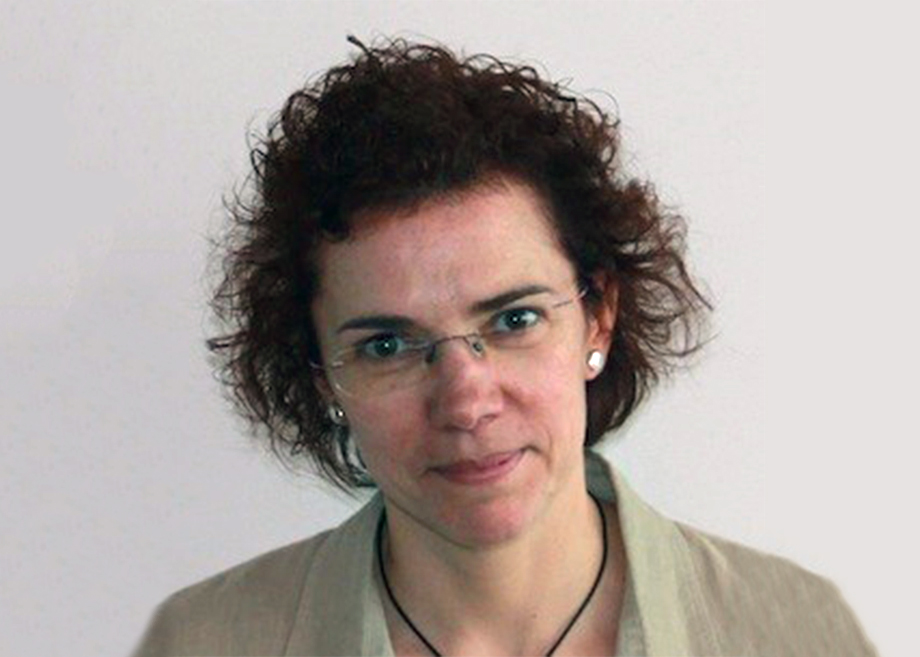
Sousa Romero, Carme
Full Professor
Catalysis, energy and environment
Department of Materials Science & Physical Chemistry
Faculty of Chemistry
University of Barcelona
c/Martí i Franquès, 1
+34 93 4029021Carmen Sousa graduated in Chemistry from the University of Barcelona in 1989. She received her Ph.D. in Physical Chemistry at the same university in 1994 under the supervision of Prof. Francesc Illas. Afterwards, she moved to the University of Groningen (The Netherlands) for two years as a postdoctoral fellow with Prof. W. C. Nieuwpoort and R. Broer. In 1997 she joined the Physical Chemistry Department in the University of Barcelona, where she is Full Professor since 2020. Dr. Sousa has more than 30 years of expertise in the application of Computational Chemistry to understand the electronic, optical, magnetic and transport properties in bulk and surface materials with applications in several fields of interest as Heterogeneous Catalysis, Photocatalysis, Solar cells, sensors, storage devices, etc.
Over the last ten years the main research lines that have been developed are: (i) Study of magnetic properties induced by radiation in materials containing transition metals, such as spin crossover complexes. The theoretical description of these materials permits to obtain a complete description of the photoinduced process hardly accessible experimentally (absorption processes, deactivation, spin transitions, concomitant structural changes, dynamics of the photocycle). (ii) Study of the optical properties of molecules, clusters, and highly correlated materials. This study includes the analysis of the structural and electronic properties of the excited states of clusters of different sizes and of defects and impurities in solids and surfaces. (iii) In the last years, in collaboration with the Oak Ridge National Laboratory (USA), the University of Groningen (The Netherlands) and the University Rovira i Virgili (Spain), a new research line was initiated on the development and applications of a renewed non-orthogonal configuration interaction program. This methodology allows to study intermolecular energy and electron transfer processes which are at the heart of several applications in the field of energy conversion and storage of sunlight as chemical energy. In this project, singlet fission processes, multiple exciton generation, exciton delocalization and dispersion and donor-acceptor electron transfer processes in various organic materials are being studied. (iv) Study of MXenes, a new class of 2D materials composed by transition metal carbides and nitrides with promising properties as photocatalytic materials due to their unique electronic and surface properties. Based on DFT calculations, we explore the different factors that affect the bandgap and band structure such as their composition, thickness, stacking, and surface termination to screen and engineering optimal materials to photocatalyze different reactions, e.g., water splitting by solar light to produce hydrogen as a green fuel. Machine Learning (ML) techniques have been applied to classify the metallic/semiconductor character of the MXenes and to predict their bandgap values. For the candidates with the adequate bandgap alignment for water splitting, the mechanism of the reaction will be studied by studying the reactivity in the excited state.
